f you’re planning a move, you’ve probably asked yourself one important question:
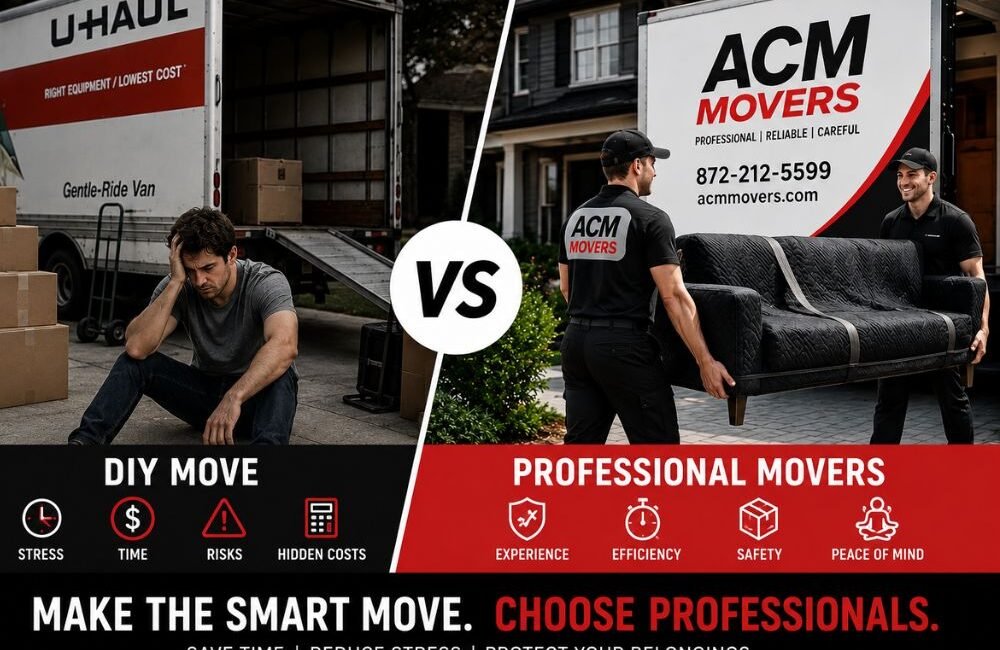
Should I rent a truck and move myself, or hire professional movers?
At first glance, a DIY move seems like the cheaper option. Rent a truck, ask a few friends for help, and save money.
But after adding fuel, insurance, equipment rental, extra mileage, packing supplies, food, time off work, and the possibility of damaged furniture or injuries, the total cost is often much higher than people expect.
If you’re comparing DIY moving vs. professional movers, this guide will help you understand the real costs and decide which option is right for your move
When a DIY Move Makes Sense
A do-it-yourself move can be a good choice if:

- You’re moving only a few pieces of furniture.
- The move is less than 10–15 miles.
- You live on the first floor.
- You already own a pickup truck or trailer.
- You have several experienced people helping.
- There are no heavy or fragile items.
- You have plenty of time.
For a small studio apartment with just a few boxes, DIY moving can be a practical option.
Hidden Costs of a DIY Move
Many people only think about the truck rental. In reality, there are several additional expenses.
Truck rental
A rental truck may appear inexpensive, but the advertised rate often doesn’t include:
- Mileage charges
- Fuel
- Taxes
- Insurance
- Environmental fees
- Equipment rental
Moving equipment
Many customers also need to rent:
- Furniture dollies
- Appliance dollies
- Hand trucks
- Moving blankets
- Furniture straps
- Ramps
Fuel
Moving trucks consume much more fuel than passenger vehicles, especially in city traffic.
Long-distance moves can significantly increase fuel costs.
Packing supplies
Don’t forget:
- Moving boxes
- Bubble wrap
- Packing paper
- Stretch wrap
- Packing tape
- Mattress covers
These supplies can add up quickly.
Food and drinks
If friends help, you’ll likely provide meals, snacks, or drinks throughout the day.
Time off work
Taking one or two unpaid days off work can become one of the largest hidden costs of a DIY move.
The Cost You Can't Easily Measure: Risk
One damaged item can erase the money you hoped to save.
Common DIY moving accidents include:
- Scratched hardwood floors
- Damaged walls
- Broken TVs
- Cracked mirrors
- Broken dining tables
- Torn couches
- Dropped appliances
- Broken stair railings
Heavy lifting also increases the risk of:
- Back injuries
- Shoulder injuries
- Knee injuries
- Finger injuries
- Slips and falls
Moving a refrigerator, sectional sofa, treadmill, or safe without proper equipment can quickly become dangerous.
Why Professional Movers Save Tim
Professional movers don’t simply lift furniture.
They know how to:

- Protect floors
- Wrap furniture
- Carry heavy items safely
- Use moving straps
- Load trucks efficiently
- Prevent shifting during transport
- Navigate tight staircases
- Work around elevators
- Maximize truck space
Because experienced crews work every day, they often complete moves much faster than friends or family members.
A Simple Cost Comparison
Here’s an example of a typical one-bedroom local move.
DIY Moving | Professional Movers |
|---|---|
Truck rental | ✔ |
Fuel | ✔ |
Insurance | ✔ |
Moving equipment | ✔ |
Boxes & supplies | ✔ |
Time off work | ✔ |
Heavy lifting | You |
Risk of injury | Higher |
Risk of furniture damage | Higher |
Professional equipment | ✘ |
Furniture protection | Limited |
Experienced crew | Friends |
At first glance, DIY appears cheaper.
After adding hidden costs, many customers discover the price difference is much smaller than expected.
When Hiring Professional Movers Is Worth It
Professional movers are usually the better choice if:
- You’re moving a house.
- You’re moving a two-bedroom apartment or larger.
- You have stairs.
- You’re moving to or from a high-rise.
- You own expensive furniture.
- You have fragile artwork or TVs.
- You have a piano, treadmill, safe, or pool table.
- You’re moving long distance.
- You’re short on time.
- You simply don’t want the physical strain.
Why Many Chicago Residents Choose ACM Movers
At ACM Movers, we help customers move safely and efficiently throughout Chicago, Oak Park, Naperville, Evanston, Glenview, Schaumburg, Arlington Heights, Northbrook, Wilmette, Winnetka, and surrounding communities.
Our professional crews provide:
- Local moving
- Long-distance moving
- Packing services
- Furniture protection
- Apartment moving
- House moving
- Office moving
- Storage solutions
- Labor-only moving
Our goal is to make moving simpler, safer, and more organized.
Which Option Is Right for You?
There is no single answer.
If you’re moving a few boxes across town, DIY may be enough.
If you’re moving a family home, expensive furniture, or anything requiring stairs, elevators, or careful planning, hiring professional movers often saves time, reduces stress, and lowers the risk of costly damage.
Before making your decision, compare the total cost—not just the truck rental.
Sometimes the smarter choice isn’t the cheapest option on paper—it’s the one that gets everything safely from Point A to Point B.
Need advice about your move? Contact ACM Movers for a free estimate and compare your options before moving day.
FAQ:
For very small moves, doing it yourself may cost less. For larger homes, long-distance moves, or moves involving stairs, elevators, or heavy furniture, professional movers often provide better overall value once hidden costs are considered.
Hidden costs may include truck mileage, fuel, insurance, moving equipment, packing supplies, tolls, parking, meals, and time away from work.
Hiring professional movers is recommended for larger homes, heavy furniture, valuable or fragile items, long-distance moves, office relocations, and situations where you want to reduce physical strain and the risk of damage.
Yes. ACM Movers offers labor-only moving services, including loading and unloading rental trucks, PODS®, and storage units.
For many people, yes. Professional movers can save time, reduce the risk of injury, protect furniture, and make the moving process much more efficient.
