A treadmill is not “just furniture.” It’s heavy, awkward, and expensive—and if it’s moved the wrong way, the damage can be immediate: scratched floors, cracked walls, broken consoles, bent frames, or a machine that suddenly won’t run the same. The same goes for gym equipment like squat racks, cable machines, ellipticals, Pelotons, weight stacks, benches, and adjustable dumbbells.
At ACM Movers, we treat treadmill and gym equipment moving like a controlled job: plan the route, protect the home, stabilize the equipment, and secure it for transport. If you’re searching movers near me and you want a team that can handle heavy equipment without drama, this is exactly what we do across Chicago and the suburbs.
Why Treadmills Are So Hard to Move
Most treadmills are heavy in the worst way: the weight is concentrated in the motor and deck, and the shape makes it difficult on stairs or tight turns. Common risks include:

- Floor and stair damage (scrapes, dents, cracked edges)
- Wall/doorframe damage from uncontrolled pivots
- Console and wiring damage if the unit is tilted or dragged
- Unstable loading that causes shifting during transport
Our Step-by-Step Process
How We Move Gym Equipment Safely
1) Access planning
(stairs, turns, door widths)
Before we lift anything, we plan:
- stairs + landings
- narrow hallways
- sharp turns
- tight basement entries
- condo elevators + time windows
This is where most mistakes happen—so we plan it first.
2) Disassembly when it’s the safer option
Some equipment needs partial disassembly to reduce risk:
- removing handles/arms on ellipticals
- separating weight stacks/cables when required
- folding and securing treadmill frames (if designed for it)
- removing removable parts and protecting connectors
We keep hardware organized so reassembly is straightforward.
3) Protection: floors, corners, and doorframes
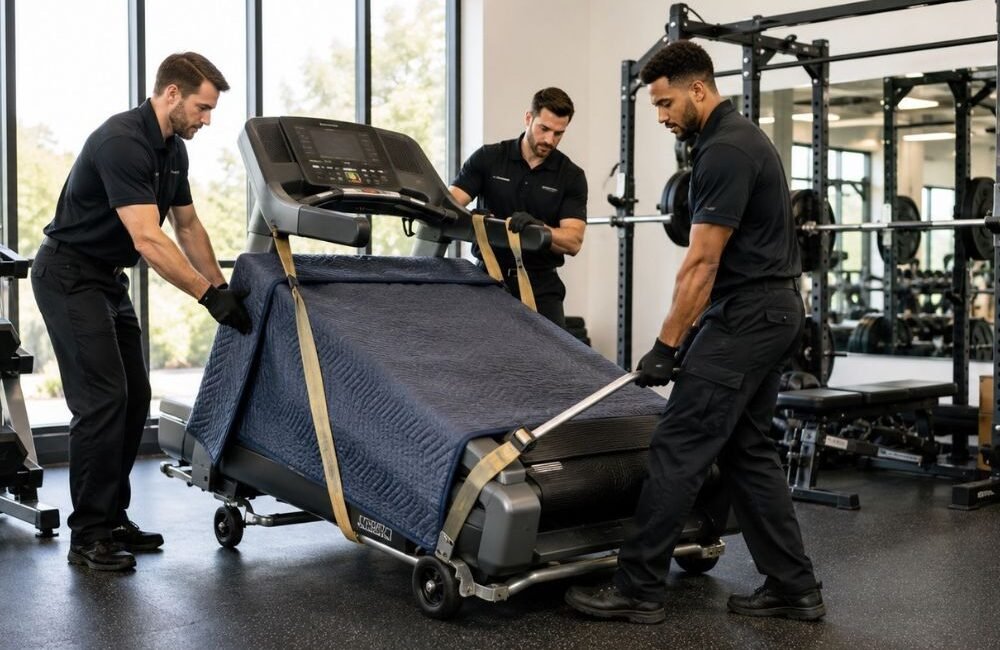
We use moving blankets, stretch wrap, and corner protection. For heavy equipment, floor protection matters just as much as equipment protection—especially in homes with hardwood, tile, or newer finishes.
4) Controlled carrying + secure loading
We use the right number of movers and controlled handling—especially on stairs. Once on the truck, equipment is strapped and stabilized so it doesn’t shift during braking or turns.
5) Placement at destination (ready for setup)
We place equipment where you want it and can help coordinate basic positioning so your space is ready—whether it’s a basement gym, spare room, or garage setup.
Quick Tips Before Your Gym Equipment Move
Here are a few things that save time and reduce risk:
- Unplug and remove cords/accessories (clips, tablets, mats, bands)
- Empty storage compartments (small parts can break or get lost)
- Clear the route (rugs, décor, narrow obstacles)
- Tell us about stairs and tight turns—that’s the #1 planning factor
- If you’re in a condo: confirm elevator reservation and loading rules
Where We Move Gym Equipment
We handle treadmill and gym equipment moves across Chicago and the suburbs, including Oak Park, Evanston, Skokie, Naperville, Glenview, Northbrook, Wilmette, Winnetka, Hinsdale, and more. Whether it’s one treadmill or a full home gym, the goal is the same: no damage, no shortcuts, no surprises.
If you want a quote, we’ll ask the right questions upfront (stairs, access, equipment type) so your estimate is accurate and your moving day is smooth.
FAQ:
Yes—stairs and turns are the main planning variables. Tell us the stair count and landings so we can plan the right crew and safe handling.
Yes, when needed for safety. Some machines move better partially disassembled to avoid damage and tight corners.
Uncontrolled shifts—scrapes to floors/doorframes and damage to the console or frame. Protection + controlled handling prevents it.
Yes. Remove loose items and pack accessories separately to reduce risk and protect moving parts.
It depends on access (stairs/elevator), distance, and the equipment type. Local moves are typically completed same day with proper planning.
