
Moving to Wilmette often means more space, more rooms—and far more belongings to organize than a typical apartment move. A family relocating from Chicago may be leaving a condo or townhome and moving into a multi-level single-family house with a basement, garage, patio, home office, children’s rooms, and outdoor equipment. That makes planning just as important as moving day itself.
The right plan should answer practical questions early: How large should the moving crew be? Which items need professional packing? Will a sectional fit through the new doorway? What should stay with the family for the first night? And what happens if the closing dates do not line up?
This guide explains how to prepare for a family move to Wilmette, whether you are relocating from Chicago, moving within the North Shore, or arriving from another state.
Why a Family Move to Wilmette Requires a Different Plan
The number of bedrooms does not tell the whole story. Two four-bedroom homes can require very different amounts of labor depending on their layout, inventory, access, and the level of packing needed.
A Wilmette move may include:
- furniture spread across two or three floors;
- a finished basement with a playroom, gym, storage area, or home theater;
- a full garage with bicycles, tools, shelving, sports equipment, and seasonal items;
- patio furniture, grills, planters, and outdoor toys;
- large dining tables, sectionals, armoires, or exercise machines;
- fragile kitchenware, artwork, mirrors, and multiple TVs;
- children’s belongings that must remain organized and easy to find.
When requesting an estimate from a moving company in Wilmette, include every part of the property—not only the main living space. A complete inventory helps the company recommend the right truck capacity, crew size, packing materials, and schedule.
Moving from Chicago to Wilmette: What Changes?
A move from Chicago to Wilmette may be local in distance, but it can involve two very different access plans.
At the Chicago address, the movers may need to coordinate an elevator, loading dock, Certificate of Insurance, alley access, or restricted truck parking. At the Wilmette home, the main concerns may be driveway width, low branches, exterior steps, narrow doorways, hardwood floors, and the distance from the truck to the entrance.
Before moving day, confirm:
- The permitted moving hours at the Chicago building.
- The elevator and loading-dock reservation window, if applicable.
- Where the truck can park at both addresses.
- Whether the Wilmette driveway can safely accommodate a moving truck.
- Which entrance provides the widest and safest path into the home.
- Whether any furniture must be disassembled before it can leave or enter.
Some Wilmette streets have permit parking, and the Village has separate rules for temporary overnight parking, including moves. Parking restrictions can also change during snow events, leaf collection, or other local operations. Check the current requirements with the Village of Wilmette before the move, especially if a truck or personal vehicle may remain on the street.
Build a Moving Plan Around Your Family—not Just the Truck
For families with children, a good move protects routines as well as furniture. The goal is to keep essential items available while the rest of the home is packed in a logical order.
Give each child one clearly marked essentials bag
Pack a backpack or small suitcase for each child with:
- clothes and pajamas for one or two days;
- medications and basic toiletries;
- a favorite toy, book, or comfort item;
- school supplies or devices needed immediately;
- chargers, headphones, and a water bottle.
These bags should travel with the family, not in the moving truck.
Create a safe plan for moving day
Open doors, stacked boxes, tools, and people carrying furniture can make moving day stressful for young children and pets. If possible, arrange for them to stay with a relative, sitter, or trusted friend during the busiest loading and unloading hours.
For older children, assign simple choices before moving day: let them select the items that travel with them, choose color labels for their rooms, or prepare a small box they can unpack themselves. This gives them a sense of control without placing them in the work area.
Label by destination room

Label boxes for the room where they will go in the new Wilmette home, not the room they came from. “Second-floor bedroom — Maya” is more useful to the crew than “Bedroom 2.” A simple room map near the entrance can also reduce questions and unnecessary carrying.
What to Pack Separately for the First Night
Even a well-organized move can leave a family surrounded by boxes on the first evening. Prepare a first-night kit and keep it in your vehicle or another clearly designated location.
Include:

- medications and important documents;
- phone and device chargers;
- toiletries, towels, and toilet paper;
- a change of clothes and sleepwear;
- basic cleaning supplies and trash bags;
- disposable plates, cups, utensils, and simple snacks;
- coffee or tea supplies;
- pet food, bowls, leashes, and litter supplies;
- bedding for every family member;
- basic tools, scissors, and a box cutter;
- school or work items needed the next morning.
Also create an “open first” box for the kitchen and each bedroom. Use a different label color so these boxes are easy to identify at the new home.
The Spaces Families Most Often Forget During an Estimate
The basement, garage, attic, patio, and outdoor storage areas can add hours of packing and loading. They also contain many items that cannot simply be placed into a standard box.
Basement
List storage bins, shelving, exercise equipment, workshop tools, playroom furniture, freezers, and electronics. Tell the movers whether there is a direct exterior entrance or whether everything must travel up a narrow staircase.
Garage
Review bicycles, lawn equipment, ladders, tool cabinets, sports gear, and loose hardware. Drain fuel from gas-powered equipment and ask the mover which liquids or hazardous materials cannot be transported.
Patio and yard
Count every chair, table, planter, umbrella, grill, outdoor toy, and storage bench. Clean and dry outdoor furniture before it is loaded. Large planters may require special handling, and some movers may not transport plants.
Attic and closets
Seasonal decorations, luggage, clothing, and archived household items are easy to overlook. Include them in the inventory even if they are already stored in bins.
Photographs or a video walkthrough can make a remote estimate more accurate. For a large family home, an in-home walkthrough is often the best way to identify access issues and special items.
How to Plan for Oversized Furniture
Large furniture is not only heavy; it may be too wide, tall, or inflexible for the path into the new house. Sectionals, dining tables, bed frames, armoires, desks, gym equipment, and oversized appliances should be reviewed before moving day.
Measure:

- the item’s height, width, and depth;
- exterior and interior doorways;
- stair width and ceiling clearance;
- tight turns, landings, and hallway width;
- elevator doors and interior dimensions, if applicable.
Do not assume that an item that fit in the old home will fit through the new entrance. In some cases, removing legs, doors, shelves, or hardware is enough. Other items may require a different entrance or specialized handling. Share measurements and photos with your Wilmette movers in advance so the correct tools and labor can be planned.
Protecting Hardwood Floors, Doorways, and Stairs
Home protection should be part of the moving plan before the first piece of furniture crosses the doorway.
Depending on the home and weather, the crew may use:
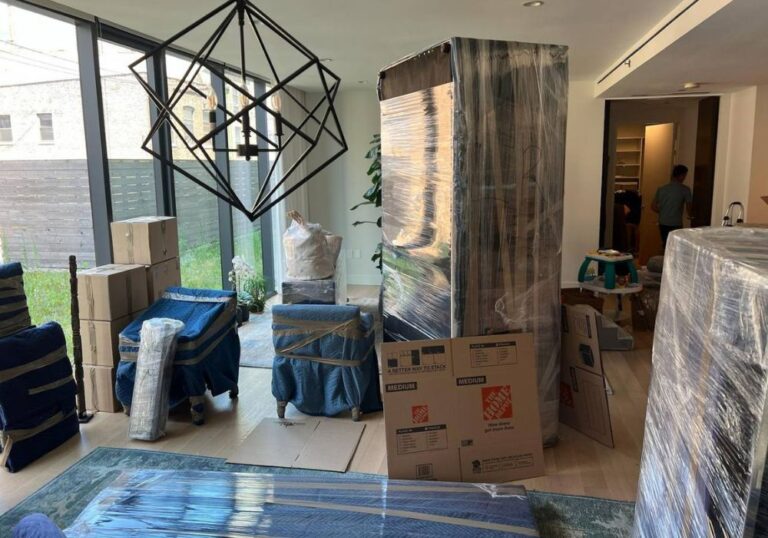
- floor runners or protective covering on main traffic paths;
- moving blankets and stretch wrap on furniture;
- doorway, railing, or corner protection where needed;
- mattress bags and protective cartons;
- careful staging to keep entrances and stairways clear.
Ask the moving company how it plans to protect both the home you are leaving and the Wilmette home you are entering. Mention newly refinished floors, delicate stair rails, narrow hallways, or fresh paint during the estimate—not after the truck arrives.
Choosing the Right Crew Size for a Wilmette Home Move
More movers can increase the hourly labor rate, but an undersized crew may take much longer and can be inefficient for a large, multi-level home. The right crew size depends on the complete workload.
A smaller crew may be appropriate for a limited inventory, an apartment, or a partial move. A three-person crew may work well for a moderately sized household with straightforward access. Larger family homes, multiple floors, substantial packing, long carries, heavy pieces, or strict timing may require four or more movers.
The estimate should account for:

- the number of rooms and total inventory;
- stairs at both properties;
- walking distance between the home and truck;
- furniture disassembly and reassembly;
- the quantity of boxes still needing packing;
- oversized or unusually heavy items;
- elevator or loading restrictions;
- the target completion window.
Do not choose a crew based only on the lowest hourly rate. Ask which crew size is expected to complete the move efficiently and why. A reliable moving company in Wilmette should be able to explain the recommendation based on the actual inventory and access conditions.
Local vs. Long-Distance Moving: What Is the Difference?
A local move may take place within Wilmette or between nearby communities such as Evanston, Winnetka, Glenview, Northbrook, and Chicago. The move is usually planned around labor time, truck access, travel, packing, and any additional services.
A long-distance move has more variables. The plan may include a delivery window, inventory documentation, route scheduling, state-to-state requirements, and different pricing terms. Families should ask:

- Is the estimate binding, non-binding, or based on actual weight or space?
- Is pickup and delivery handled by the same company?
- What is the expected delivery window?
- Are items transferred between trucks or storage facilities?
- What valuation coverage options are available?
- Which items cannot be transported?
ACM Movers handles both local and long-distance relocations. Whether you are moving from Chicago to Wilmette, between North Shore communities, or from Wilmette to another state, the estimate should clearly identify the services included.
A Practical Timeline for Your Wilmette Move
Four to eight weeks before
- Request an in-home or video estimate.
- Build a complete inventory, including the basement, garage, patio, and attic.
- Decide whether you need packing or temporary storage.
- Review oversized furniture and measure access points.
- Reserve elevators, loading areas, or building time slots.
Two to three weeks before
- Confirm the crew, arrival window, and contact information.
- Begin room-by-room labeling.
- Arrange care for children and pets on moving day.
- Separate donations and items that will not be moved.
- Verify parking requirements at both addresses.
During the final week
- Pack first-night bags and essential documents.
- Photograph valuable items and electronics connections.
- Empty and defrost appliances as instructed.
- Confirm that outdoor items are clean and dry.
- Prepare a simple room map for the new home.
On moving day
- Keep keys, medications, documents, jewelry, and devices with you.
- Walk through the home with the crew leader.
- Identify fragile, high-value, and “open first” boxes.
- Check the basement, garage, closets, attic, and yard before departure.
- Complete a final walkthrough after unloading.
North Shore Movers for Wilmette Families
The best family move is not simply fast. It is organized around the home, the inventory, the access, and the people who need to settle in afterward.
ACM Movers provides residential moving, professional packing, furniture protection, storage coordination, and local and long-distance moving services in Wilmette and throughout Chicago’s North Shore. Our service area includes moves between Wilmette, Evanston, Winnetka, Glenview, Northbrook, and Chicago.
If you are comparing Wilmette movers or searching for dependable family movers near you, start with a detailed inventory and a realistic access plan. The more your movers know before moving day, the more accurately they can plan the crew, truck, materials, and timing.
Ready to plan your move? Explore ACM Movers’ moving services in Wilmette or request a free moving quote.
FAQ About Moving in Wilmette, IL
For a large family home, booking several weeks ahead gives you more flexibility with dates, crew size, packing, and storage. Summer, weekends, and the end of the month are usually the first dates to fill. If your move is sooner, contact the moving company anyway; availability can change.
The cost depends on the inventory, crew size, labor time, travel, stairs, walking distance, packing, furniture assembly, heavy items, and storage. A walkthrough or detailed video estimate is more useful than a price based only on the number of bedrooms.
A moderate household may be handled efficiently by three movers, while a large multi-level home, extensive packing, oversized furniture, or a strict schedule may require four or more. The moving company should base its recommendation on the inventory and access at both properties.
Yes. Professional packing can cover the entire home or only fragile categories such as dishes, glassware, artwork, mirrors, and televisions. Identify large, valuable, or unusually delicate pieces before the estimate so the correct cartons and protection can be prepared.
Requirements depend on the street, vehicle, time, and parking restrictions. Some areas require residential permits, and oversized or overnight vehicles may need separate permission. Check current rules with the Village of Wilmette and tell your mover about any access limitations before moving day.
Yes. Moving and temporary storage can be coordinated when closing dates do not align, renovations are incomplete, or only part of the inventory should be delivered. Ask how items will be protected, inventoried, stored, and redelivered when requesting the estimate.
Yes. ACM Movers handles local relocations between Chicago and Wilmette, as well as moves involving Evanston, Winnetka, Glenview, Northbrook, other North Shore communities, and long-distance destinations.
