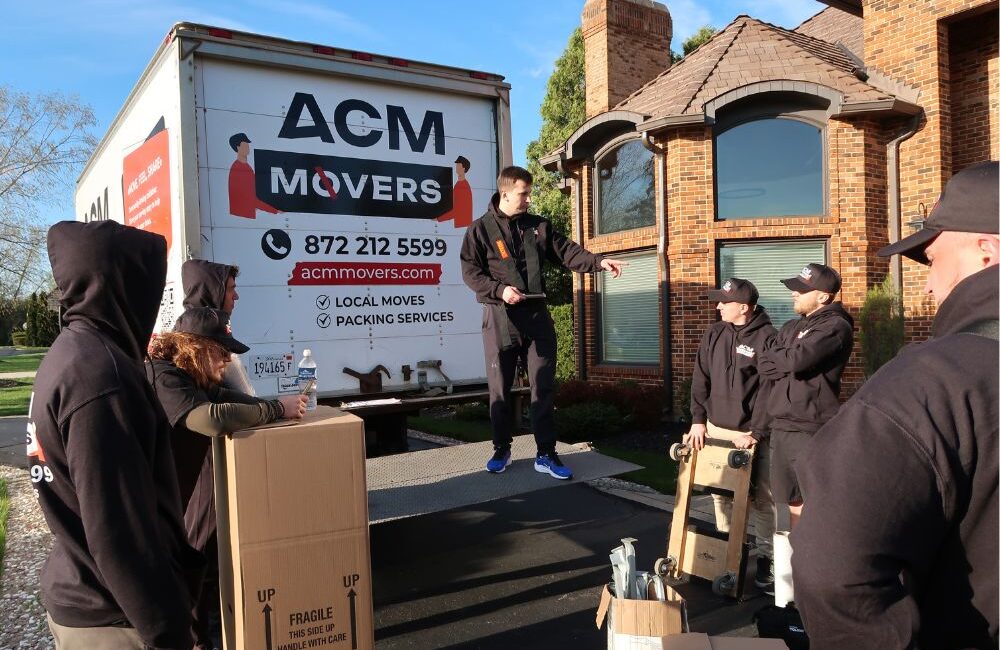
If you’re searching “movers near me” or “moving company near me,” you’re usually trying to answer two questions fast: How much will it cost? and How will my stuff be packed and moved without damage or delays?
This guide gives you both: realistic 2026 price ranges for Chicago suburbs, a step-by-step packing system, and the logistics plan that makes the day go smoothly.
Quick Takeaways:
- Most moving quotes are driven by labor hours + truck size + access complexity + packing materials.
- “Cheap” often becomes expensive when the job runs long due to poor packing, parking problems, stairs, elevators, or narrow hallways.
- A reliable plan = pre-walkthrough + packing zones + loading order + time windows.
Real Price Ranges for Chicago Suburbs Moves (2026)
Below are typical ranges you’ll see in 2026 around Chicago suburbs. Final price depends on access (stairs/elevator), distance, packing level, and heavy items.
Typical Local Move Price Ranges (within suburbs / Chicagoland area)
Home Size | Crew | Typical Time | Typical Price Range |
|---|---|---|---|
Studio / 1BR apartment | 2 movers | 3–5 hours | $450–$950 |
2BR apartment / condo | 2–3 movers | 4–7 hours | $750–$1,650 |
3BR townhouse | 3 movers | 6–9 hours | $1,200–$2,400 |
3–4BR single-family home | 3–4 movers | 7–12 hours | $1,800–$3,800 |
Large home / estate (4–6BR) | 4–6 movers | 10–18 hours | $3,200–$7,500 |
*Ranges assume local labor + truck, not specialty crating, not long-distance linehaul.
Packing Service Add-On Ranges (Most Common)
Packing Level | What it usually includes | Typical Add-On Range |
|---|---|---|
Partial packing | kitchen breakables + fragile items | $250–$850 |
Room-by-room packing | kitchen + closets + decor | $700–$2,200 |
Full packing | whole home packing + materials | $1,500–$4,500+ |
Artwork / mirror protection | padding, corner guards, optional custom box | $75–$350 each |
TV packing | TV box + foam + secure load | $75–$250 each |
What pushes you to the higher end: third-floor walkups, long carries from truck to door, tight staircases, elevator reservation issues, and last-minute packing.
Most reputable movers in the Chicago area price local moves like this:
Total Cost ≈ (Crew Rate × Hours) + Travel/Trip Fee + Packing Materials + Specialty Handling
The 7 Factors That Change Cost (Fast)
- Inventory volume (how many rooms + how full closets are)
- Access (stairs, elevator, long carry, narrow hallways)
- Packing level (DIY vs partial vs full packing)
- Heavy/special items (piano, safe, treadmill, big sectional, marble table)
- Distance & traffic windows (suburb-to-suburb can still be slow at rush hours)
- Building rules (COI, elevator booking, service entrance hours)
- Weekend / peak season timing (late spring–summer and month-end dates)
If you want an accurate quote, your goal is to eliminate surprises in these seven points.
Step-by-Step Packing System (The One That Prevents Damage)
This is the packing plan ACM Movers uses as a “no-chaos” system: zones, materials, labeling, and load order.
Step 1 — Create 5 Packing Zones (One Hour Setup)
Use painter’s tape + marker and label areas:
- ZONE A: Keep With You (documents, medications, valuables)
- ZONE B: Fragile (glass, ceramics, small electronics)
- ZONE C: Open-First (bedding, coffee maker, shower items, chargers)
- ZONE D: Standard Boxes (books, pantry, decor)
- ZONE E: Oversize / Furniture (TV, art, mirrors, lamps, floor items)
This single step cuts loading time and prevents “where is it?” chaos.
Step 2 — Materials Checklist (What Actually Works)
For a safe move, you typically need:
- Small/medium/large boxes (don’t overfill large)
- Dish packs (for kitchen)
- Packing paper (not only bubble wrap)
- Bubble wrap (selective: glass, electronics edges)
- Stretch wrap (drawers, bundles, sofa protection)
- Moving blankets (furniture, railings, door frames)
- Tape + markers + labels
- Mattress bags
- Corner protectors (art, mirrors, furniture corners)
Rule: heavy items go in small boxes (books, tools), light bulky items go in large.
Room-by-Room Packing: Exactly How to Pack the Hard Stuff
Kitchen (Most Breakage Happens Here)
Goal: no rattling, no empty space, no “mixed heavy + fragile.”

System:
- Line box bottom with crumpled paper
- Wrap each item with paper (bubble only for extra-fragile)
- Plates vertical (like records), not stacked flat
- Fill all voids (nothing should shift when you shake the box)
- Mark: “KITCHEN – FRAGILE – THIS SIDE UP”
Typical time: 1–2 hours for a standard kitchen if done carefully.
Closets & Clothing (Fast Without Wrinkles)

- Keep clothes on hangers with wardrobe boxes (best)
- Or bundle 10–15 hangers, wrap with stretch wrap, place in large box
- Shoes: pack in medium boxes, not garbage bags (bags tear and get dirty)
Tip: label closet boxes by room: “Primary Bedroom Closet”, “Guest Closet”.
TVs & Electronics (Avoid the Expensive Mistake)
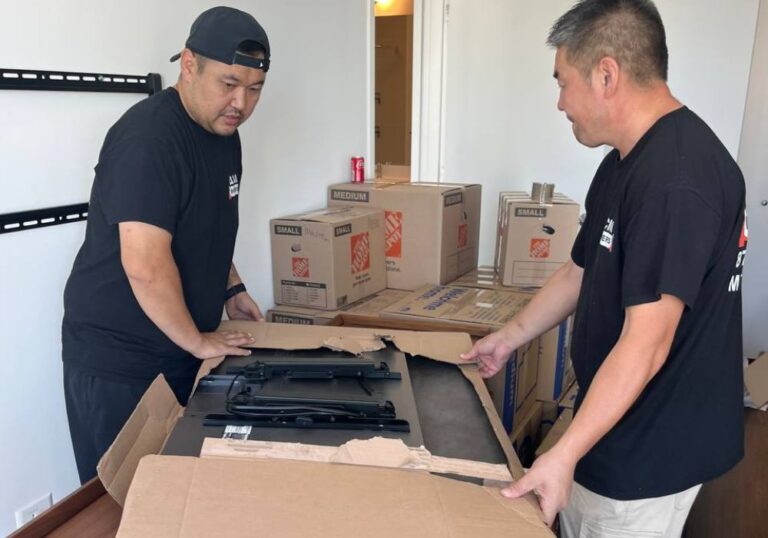
- If you have the original TV box — use it
- If not, use a proper TV box with foam corners
- Never lay TV face-down with pressure on the screen
- Cables: label with a simple system: “TV1 / HDMI1 / Soundbar”
Artwork, Mirrors, Frames (High-Risk Category)

- Corner protectors + foam/paper wrap
- For large art: picture box or custom carton
- Mark: “FRAGILE – ART – DO NOT STACK”
- Load placement: upright, strapped, protected by blankets
Loading & Logistics Plan (What Pros Do That DIY Can’t)
If a move goes over time, it’s almost always logistics—not strength.
Parking Plan (Chicago Suburbs Reality)
Before moving day:
- Identify truck access: driveway, alley, curb space
- Reserve loading zone if building requires it
- Avoid “long carry” by planning the closest legal spot
- If street is tight, plan a time window with less traffic
Why it matters: every extra 50–100 feet of carry adds time and fatigue, and fatigue increases damage risk.
Elevator & Building Rules
If you live in a condo:
- Book elevator slot (and service entrance if needed)
- Confirm COI requirements
- Protect elevator walls if building requires padding
No elevator slot = the crew waits = your hours increase.
Time Windows & Traffic (The Suburb Trap)
Suburb-to-suburb moves can still get hit by:
- school drop-off/pick-up patterns
- commuter peaks
- construction
Good rule: start early and load the truck before the first traffic spike.
Example Route Scenarios (How Timing Changes Cost)
Scenario A: Oak Park → Arlington Heights (condo to home)
- Risk: elevator schedule + busy streets
- Best move window: early morning load, mid-day drive
- What saves time: pre-labeled boxes, wardrobe boxes, reserved parking
Scenario B: Naperville → Glenview (house to house)
- Risk: volume + furniture protection + long driveway carry
- What saves time: packing done the day before, staged zones by room
- Upgrade worth it: partial packing for kitchen + fragile decor
Scenario C: Evanston → Hinsdale (townhouse to larger home)
- Risk: stairs + tight turns + high-value items
- What saves time: furniture disassembly plan + blanket-wrap workflow
- Consider: extra mover or pre-pack fragile items
(If you tell me your top suburbs, I’ll tailor these scenarios to your exact service areas + local traffic notes.)
How to Get an Accurate Quote (Without Back-and-Forth)
Send this info to ACM Movers and you’ll get a quote that matches reality:

- From/to addresses + floor number
- Stairs/elevator/long carry details
- List of heavy/special items (piano, safe, treadmill, big sectional)
- Packing level: DIY / partial / full
- Target dates + preferred time window
- Any building rules (COI, elevator booking)
This reduces “quote drift” and prevents last-minute surprises.
FAQ: Chicago Suburbs Moving & Packing (2026)
DIY packing for standard items + professional packing for kitchen, TVs, and artwork is usually the best cost/safety balance.
Have everything boxed, labeled by room, and keep pathways clear. Biggest time-saver: parking plan + staged zonesnear the exit.
Often yes, because weekends and month-end dates are high demand. If your schedule is flexible, mid-week can be better priced.
For peak season (late spring–summer), try 2–4 weeks. For off-season, 1–2 weeks may be enough—earlier is still safer.
Most full-service companies can supply materials (boxes, paper, wrap, blankets). Ask for a materials line item so you know exactly what’s included.
If you’re comparing movers near me in the Chicago suburbs and want a quote that matches real conditions (access, packing level, and timing), reach out to ACM Movers for a clear plan: packing strategy + logistics + realistic price range—so your move is smooth, protected, and on schedule.
