If you’re planning a move in Chicago, the biggest “hidden” problem often isn’t packing—it’s where the moving truck will park. Between permit zones, busy streets, snow piles, and short building windows, curb space can make or break your moving day.
This quick guide explains how Chicago moving permits and moving-day parking work, what you need to prepare, and how to reduce the chance of tickets, towing, or delays—especially during winter.
Option 1: Ward “No Parking” Signs (Courtesy Signs)
Many Chicago wards provide complimentary “No Parking” signs for residential moves. These help signal neighbors to leave space—but they’re generally not enforceable by ticketing or towing.
Common rules you’ll see across wards:
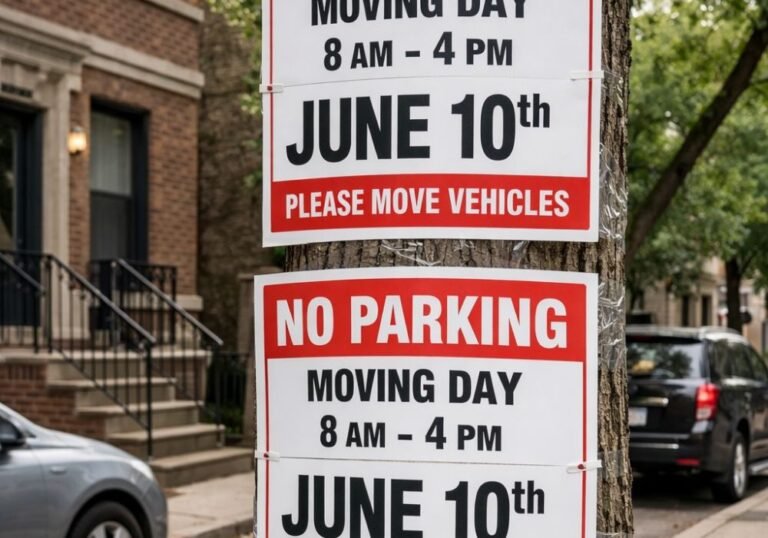
- You must pick up the signs from the ward office (or request them via a ward process).
- They’re typically for an 8-hour window (examples often include 8–4 or 9–5).
- You’re usually required to post them ~48 hours (or more) before moving day.
Best for: quieter residential streets, flexible neighbors, smaller trucks.
Option 2: CDOT Enforceable Tow-Zone Signs / Permit
If you need a reserved spot that’s actually enforceable, Chicago offers CDOT enforceable “No Parking / Tow Zone” moving signs (often used by moving companies). Ward guidance notes that CDOT provides enforceable signs for residential moves for a fee and that the process runs through the permit portal.
Why this matters: enforceable signs can reduce the risk of someone parking in your reserved space at the last minute.
Key takeaways:
- You need to plan ahead so the City has time to post signs before the move.
- The online process is handled via the City’s permit systems/portal.
Best for: busy streets, dense neighborhoods, high-rises, tight elevator windows, larger trucks.
What You’ll Need (Before You Apply or Request Signs)
Whether you’re using courtesy signs or an enforceable permit, prepare this information:
- Exact address and side of street (front/back/side entrance)
- Building requirements (loading dock rules, service entrance, elevator window)
- Nearby restrictions (bus stops, hydrants, driveways, no-stopping areas)
- Move date + preferred time window
- Truck size (small van vs 16–26 ft truck)
- How much curb space you need (many people reserve about two legal spaces for a typical moving truck)
Important: you can only reserve legal parking space—a permit doesn’t magically make an illegal spot legal.
Step-by-Step: How to Reserve Moving Truck Parking in Chicago
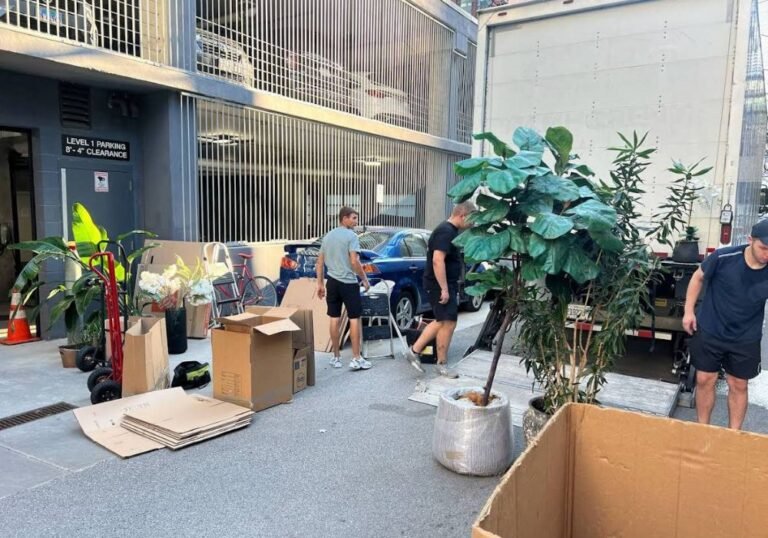
Step 1) Identify your best truck spot

Pick the curb location that minimizes carry distance and avoids:
- hydrants
- driveways
- bus zones
“No Standing / No Stopping” restrictions
Step 2) Check building rules first (especially apartments/high-rises)
Ask your building:
- Do we need an elevator reservation?
- Is a loading dock required?
- What time windows are allowed?
Step 3) Choose your “reservation method”
- Courtesy signs (ward office) → great if neighbors cooperate.
- Enforceable CDOT signs/permit → best for busy curb lanes + strict timing.
Step 4) Post signs early and correctly
Many wards require posting at least 48 hours ahead (sometimes more).
Post signs so they’re visible from both directions and don’t blow off.
Winter Moving Tip: Snow Can Block Your Reserved Space
In winter, the biggest risk is that your “reserved” area is physically unusable because of:
- snow piles from plows
- ice buildup
- blocked curb cuts
Do this 12–24 hours before the move:
- Clear the curb area as much as possible
- Salt sidewalks and the path from curb → entrance
- Keep the route safe for movers and neighbors
This is how you avoid losing time on move day—because in Chicago, time = labor hours.
How to Avoid Tickets, Towing, and Moving-Day Delays
Here’s what causes most “moving truck problems”:

- Waiting for an elevator window while the truck is parked illegally
- A neighbor ignores courtesy signs (because they’re not enforceable)
- The reserved area was never posted early enough
- The building won’t allow move-in without the required paperwork or timing
- Snow makes the curb unusable
Best practice: If you have a strict time window (elevator, loading dock, or same-day move), treat parking as a core part of the move plan—not an afterthought.
Need help planning curb access and timing for your move? Check Availability for Your Moving Date
FAQ
Not always—but if you’re moving on a busy street, a permit or posted signs can prevent delays and reduce the risk of parking issues
Many wards provide complimentary signs, but they are commonly described as not enforceable (they don’t guarantee ticketing or towing).
Ward guidance notes that CDOT provides enforceable moving signs/permits (often described as tow-zone no-parking signs) through official processes and the permit portal.
Ward examples commonly require at least 48 hours (and sometimes more). Always follow the instructions for your ward/building.
No—permits and signs generally apply to legal parking areas.
